- Out-of-Stock
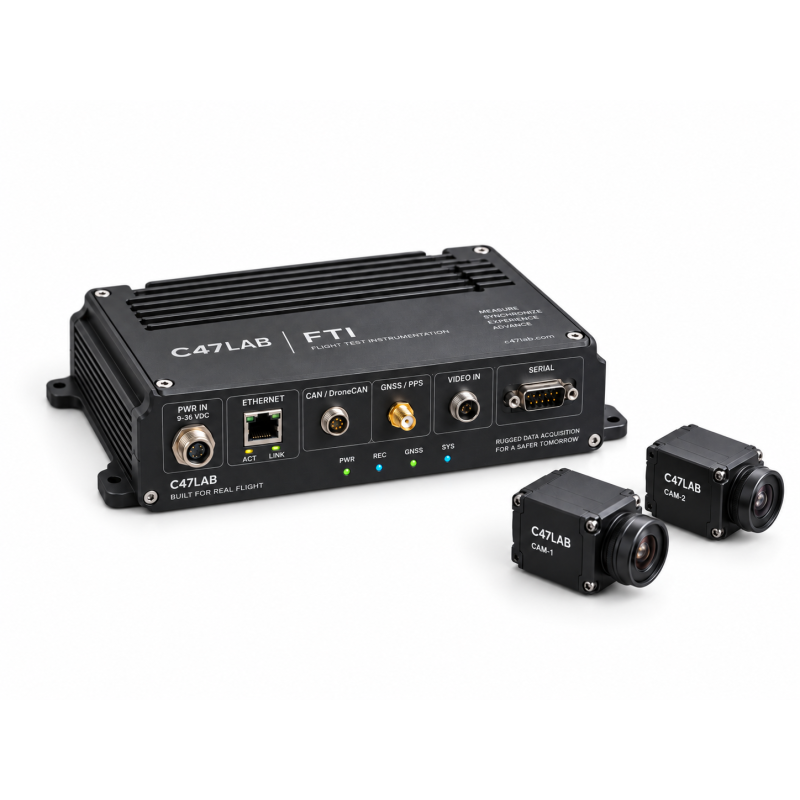


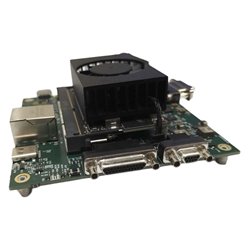
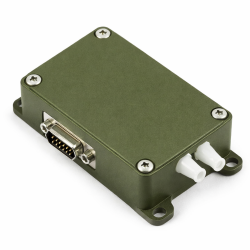
C47LAB’s Flight Test Instrumentation (FTI) System is a modular data acquisition and recording platform for UAV development, flight testing and experimental validation. It enables synchronized logging of avionics, flight-control data and onboard sensors, including IMUs, GNSS/RTK, airspeed and pressure sensors, temperature probes, voltage/current monitoring, ESC and propulsion telemetry, RPM, load cells, strain gauges, vibration sensors, actuators, LiDAR, radar, environmental sensors and payload data. The system also supports synchronized recording of visible, thermal and high-speed cameras. Data can be stored onboard or streamed in real time to a ground station through Ethernet, radio or telemetry links, providing a complete and time-correlated record of every test flight.
C47LAB’s Flight Test Instrumentation (FTI) System is a modular, high-performance data acquisition and recording platform designed for UAV development, flight testing and experimental validation.
The system provides synchronized acquisition, timestamping and storage of virtually all relevant aircraft parameters, allowing engineers to reconstruct, analyse and validate the complete behaviour of the vehicle during ground and flight tests.
The FTI can interface with both onboard avionics and independent instrumentation, supporting high-rate acquisition from a wide range of sensors and subsystems, including:
Inertial Measurement Units (IMU): accelerometers, gyroscopes and magnetometers
GNSS/GPS receivers, including RTK and multi-band positioning systems
Air Data Systems: pitot tubes, static pressure sensors, differential pressure sensors, airspeed sensors, barometric altitude sensors and angle-of-attack / sideslip sensors
Temperature sensors: ambient, motor, ESC, battery, engine, turbine and electronics temperatures
Electrical parameters: voltage, current, power, energy consumption and individual battery-cell monitoring
Propulsion data: motor RPM, propeller RPM, engine RPM, ESC telemetry, throttle commands, torque, fuel flow and fuel level
Load cells and strain gauges for structural loads, thrust measurement and force monitoring
Vibration and high-frequency accelerometers
Servo and actuator feedback: position, command signals, PWM, CAN and digital actuator telemetry
Flight control data: autopilot states, attitude, position, velocity, control commands, navigation data and mission events
CAN, UAVCAN / DroneCAN, CAN-FD, RS-232, RS-422, RS-485, UART, SPI and I²C data
Ethernet and network traffic
Payload and mission-system telemetry
Environmental sensors: humidity, pressure and external temperature
Proximity, range and altitude sensors: LiDAR, radar, ultrasonic and laser rangefinders
Optical sensors and cameras, including visible-light, high-resolution, high-speed, infrared and thermal cameras
Video streams, synchronized with aircraft telemetry and sensor data
Event and discrete signals, such as landing gear status, safety systems, parachute deployment, Flight Termination System status and payload activation
All data sources can be synchronized using a common time reference, including GNSS time, PPS, PTP or other external synchronization signals. This enables accurate correlation between sensor measurements, aircraft telemetry and recorded video.
The architecture is scalable from compact instrumentation packages for small UAVs to distributed acquisition systems for larger fixed-wing aircraft, VTOL platforms, multirotors and experimental vehicles.
Data can be recorded locally on high-speed storage and, where required, transmitted in real time through Ethernet, radio or telemetry links to a ground station for live monitoring and test supervision.
The system can be configured with custom sampling rates, communication interfaces, sensor conditioning, trigger inputs and storage capacity according to the requirements of each flight-test campaign.
C47LAB can provide the complete FTI solution, including sensor selection, data-acquisition electronics, mechanical and electrical integration, synchronization architecture, onboard computing, recording, telemetry and post-flight data-processing tools.
Typical applications include UAV development, prototype validation, aerodynamic testing, propulsion testing, structural testing, autopilot tuning, payload qualification, certification support and experimental flight-test campaigns.
C47LAB’s Flight Test Instrumentation (FTI) System is a modular data acquisition and recording platform for UAV development, flight testing and experimental validation. It enables synchronized logging of avionics, flight-control data and onboard sensors, including IMUs, GNSS/RTK, airspeed and pressure sensors, temperature probes, voltage/current monitoring, ESC and propulsion telemetry, RPM, load cells, strain gauges, vibration sensors, actuators, LiDAR, radar, environmental sensors and payload data. The system also supports synchronized recording of visible, thermal and high-speed cameras. Data can be stored onboard or streamed in real time to a ground station through Ethernet, radio or telemetry links, providing a complete and time-correlated record of every test flight.